
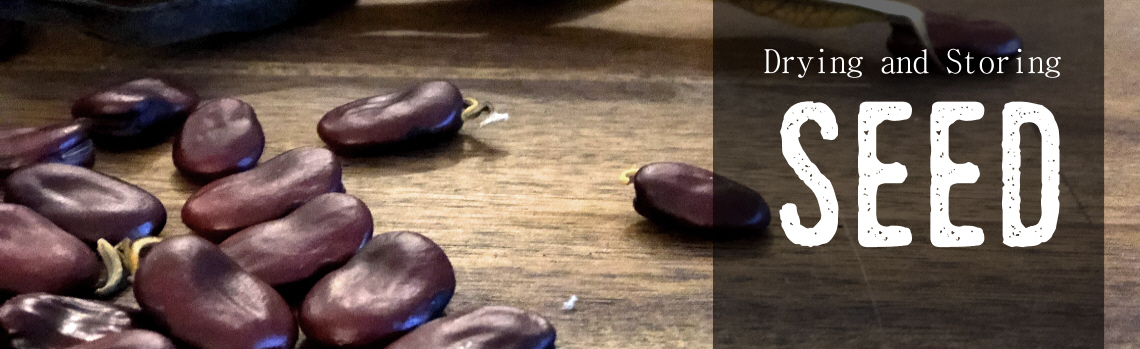
I once spoke with a grower who had hundreds of varieties of bean seed in his freezer (envious I know!). He mentioned that he always made sure that the seeds were totally dry before placing them in this super cool environment.
Testing if seeds are sufficiently dried and ready for both short or long-term storage is crucial to prevent mould and rot. The overall goal is to reduce moisture to a level where the seed is dormant but not damaged.
There's a number of different ways of doing this:
LARGER SEEDS (for medium to large seeds such as broad bean, pea, corn, pumpkin, cucumber, squash etc)
The 'Bite' or 'Snap' Test
Simply take a sample seed and either gently bite it or try to bend it. If the seed breaks, snaps or shatters instantly it is ready for long term storage. If it bends, leaves a dent or leaves a mark from your teeth it should be left to further dry.
The 'Fingernail' Test
Take a seed and press the tip of your fingernail into it. If there is no indentation, the seed is ready for storage. If an indentation or mark remains, it should be left to further dry.
SMALLER SEEDS (for smaller seeds such as brassicas, herbs, amaranth, flowers, endive etc)
The 'Jar Condensation' Test
Simply place a sample of your dried seeds into a small, airtight glass jar and seal tightly with the lid. Place it in a warm spot for a few hours or overnight. Top of hot water system is ideal. After sitting, if the inside of the jar remains clear, the seeds are at the correct moisture level and dry. If you observe any condensation or fogging on the inside of the jar, the seeds are too moist and require further drying time.
HOW TO DRY SEEDS CORRECTLY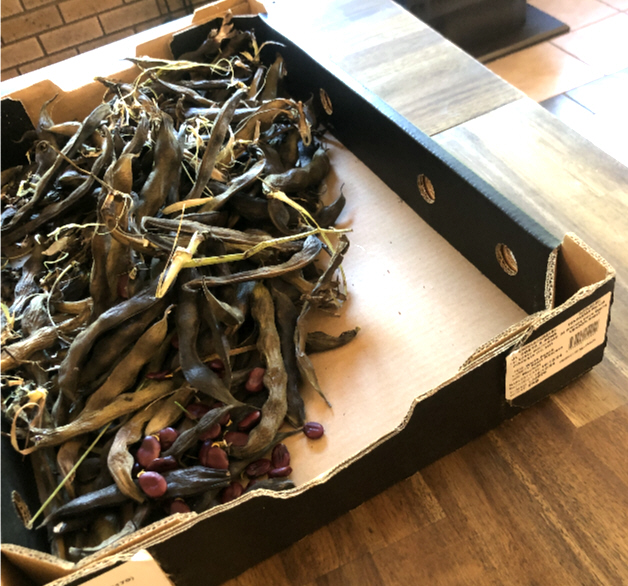
Spread hand harvested pods or seeds in a single layer on a large, flat surface and leave in a well-ventilated area, out of direct sunlight to dry. For the larger seeds and pods such as pumpkin, squash, beans and peas etc., we use the large, flat, cardboard boxes (without the hole in the crease) commonly found in grocery stores - they're effective and cheap (free!). Smaller seed types such as tomato, cucumber etc, we use dinner plates (for smaller seeds such as tomato) or tightly woven tea towels (for larger seeds such as pumpkin).
For larger quantities of seed, harvest the whole bush by cutting at the base, securing with string and hanging up to dry. This is done when at least 75% of the pods have dried and are brown and allows both the plant and seed to further dry and harden preventing damage when processing. It also allows any unpened seeds to further mature. Drying can take anywhere from one to three weeks depening on the seed and drying conditions.
SEED STORAGE TIPS:
- Seeds are best stored in a cool, dry place out of direct sunlight. The crisper section of the refrigerator is ideal but also either a dark closet, or a cool room on the south side of the house.
- A natural dessicant such as dry rice may be used to extract any excess moisture. Dried rice of equal or greater volume to the seed is placed in a cloth bag and into the seed jar which is then left for a couple of weeks.
- Avoid excess heat - do not dry in a food dehydrator as it can damage the seeds
- Seeds may be stored long term (up to 20 years) in the freezer but only if they are sufficiently dried.